It’s been a while since I’ve written here—life pulled me in a hundred directions, and in the middle of it, I lost touch with my rhythm. I’ve been busy with work, I’ve been struggling with daily nausea, and I’ve fallen away from mindful eating. If I’m honest, I’ve found myself binging again, too.
That part is hard to admit, but it’s the truth. For me, food freedom and mindful eating aren’t just practices—they’re lifelines. When I drift from them, I feel it. I feel disconnected from myself.
And yet, here I am, writing again. That’s the point I keep coming back to: the important thing is not that I never slip, but that I never give up.
Healing Isn’t Linear
I used to think once I figured out mindful eating, I’d be set forever. But healing doesn’t work like that. It’s messy. It loops back on itself. There are good weeks, and then there are weeks where old patterns sneak back in. That doesn’t erase progress—it just means I’m human.
I’ve been reminded lately that challenges with my health, stress, and life in general will sometimes knock me off track. And when that happens, I have a choice: I can label myself as a failure, or I can see it as part of the journey and gently step back onto the path.
Why I’m Not Giving Up
Every time I return to mindful eating, I feel more grounded. Every time I choose to pause before a meal, even for a breath, I remember that I’m capable of showing up for myself. Every time I share here—even after weeks away—I remind myself that honesty and persistence matter more than perfection.
Not giving up doesn’t mean forcing myself to “do better.” It means allowing myself to begin again, no matter how many times it takes.
If You’re Struggling Too
Maybe you’ve been feeling off track lately. Maybe you’ve slipped back into old patterns or feel like your body is working against you. If that’s you, I want you to hear this: you’re not alone, and you haven’t failed.
The most important thing you can do is not give up. Take one small step today—pause before your next meal, sip water slowly, breathe, or even just notice what you’re feeling without judgment. These tiny choices add up.
One Bite, One Moment at a Time
I’m reminding myself that food freedom doesn’t come from doing everything perfectly—it comes from the decision to keep showing up, one bite and one moment at a time.
So here’s to beginning again, as many times as we need to.
There was a time when I didn’t even realize I had eaten until I saw the empty wrapper on the counter.
I’d be standing in the kitchen — heart racing, mind spinning, kids yelling in the background — and suddenly I’d find myself halfway through a bag of something sweet or salty, not even remembering how it started. I wasn’t hungry. I was overwhelmed. I was touched-out. I was craving quiet and couldn’t find it. I just wanted to feel better for a second.
That was my normal for a long time.
It felt like food was the only thing that didn’t ask anything of me. It didn’t need me to be patient or regulated or productive or strong. It just let me escape — for a few minutes.
But afterward? I felt worse. Sluggish. Guilty. Distant from my own body. And that’s when I realized: I didn’t want food to be my only safe place. I wanted me to be my safe place.
Mindful eating became my slow return back to myself. Not as a diet. Not as a punishment. But as a way to reconnect. To pause. To listen. To be with myself, instead of running away from everything I was feeling.
What Is Mindful Eating, Really?
Mindful eating is the practice of bringing your full awareness to the act of eating — from the first craving to the last bite. It’s about noticing, choosing, and experiencing your food with intention.
It’s not about eating perfectly, or only eating kale, or giving up sugar forever. It’s not about counting every macro or chewing each bite 47 times.
It’s about breaking the cycle of numbing out, speeding through, and self-shaming. It’s about slowing down long enough to feel safe in your body again.
My Old Patterns: Automatic and Invisible
There were so many triggers I didn’t see clearly until I started paying attention. — When I was alone, especially at night — food filled the silence. — When I was sick or tired, I craved sugar and salt like a lifeline. — When I felt anxious, I needed the crunch or the chew or the sweetness. — When I was overstimulated (hello, toddler meltdowns), it gave me something to control.
It was so automatic, I didn’t even notice it happening. Until I was already knee-deep in brownie batter, or licking the inside of the peanut butter jar, or hiding the wrapper because I didn’t want to admit how out of control I felt.
But mindful eating isn’t about willpower. It’s about awareness.
The goal isn’t to never emotionally eat again. The goal is to notice the why — and then gently decide, “What do I really need right now?”
Sometimes the answer is still food. But other times, it’s a nap. A breath. A moment alone. Or just permission to cry.
What Mindful Eating Looks Like in My Life Now
I’m not perfect at this. I still slip. But I’ve created some habits that help me reconnect before, during, and after I eat.
Before I Eat:
I take a breath — even just one — before I grab something. It gives me a chance to ask: What am I feeling? What do I really need?
I pause and name my hunger. Is this physical hunger or emotional hunger? Both are valid. But they need different care.
I remind myself I’m allowed to enjoy food. This helps take away the guilt, so I can actually feel satisfied — instead of stuck in a shame loop.
While I Eat:
I sit down (when I can). Even if it’s just on the floor with my toddler. I try not to eat standing up like I’m rushing through life.
I put the food on a plate instead of eating from the package. It makes the act feel more intentional.
I check in halfway through. Am I still hungry? Am I full but still wanting more for emotional reasons? Just asking the question helps.
After I Eat:
I take a moment to notice how I feel. Did that food satisfy me? Or am I still needing something deeper — connection, rest, stillness?
I give myself grace. There is no “perfect” here. Some days I eat mindfully. Some days I eat emotionally. Both are human. I’m still healing.
Mindful Eating Is Not About Control. It’s About Curiosity.
For years, I thought healing my relationship with food meant I had to control it. Track it. Conquer it. But it turns out, control was never the answer. Compassion was.
Now, instead of saying, “Why did I eat that?” I ask: “What was I needing?” And that question alone softens everything.
Because at the end of the day, mindful eating isn’t about food. It’s about presence. Awareness. And the courage to stay with yourself — even in the messiest moments.
I’m not here to eat perfectly. I’m here to feel whole.
And every time I eat with intention, every time I choose connection over control, I come home to myself a little more.
If You’re Just Starting This Journey
Here’s what I’d say to you, mama — if you’re where I was:
Start small. Just one breath before eating is enough.
Get curious, not judgmental. Every moment is feedback, not failure.
You don’t need a plan, or rules, or a perfect kitchen. You just need a willingness to come back to yourself.
The goal isn’t to never eat emotionally. It’s to understand what your emotions are asking for.
You’re not broken. You’re just tired. And maybe food was the only one listening for a while. But now… you are.
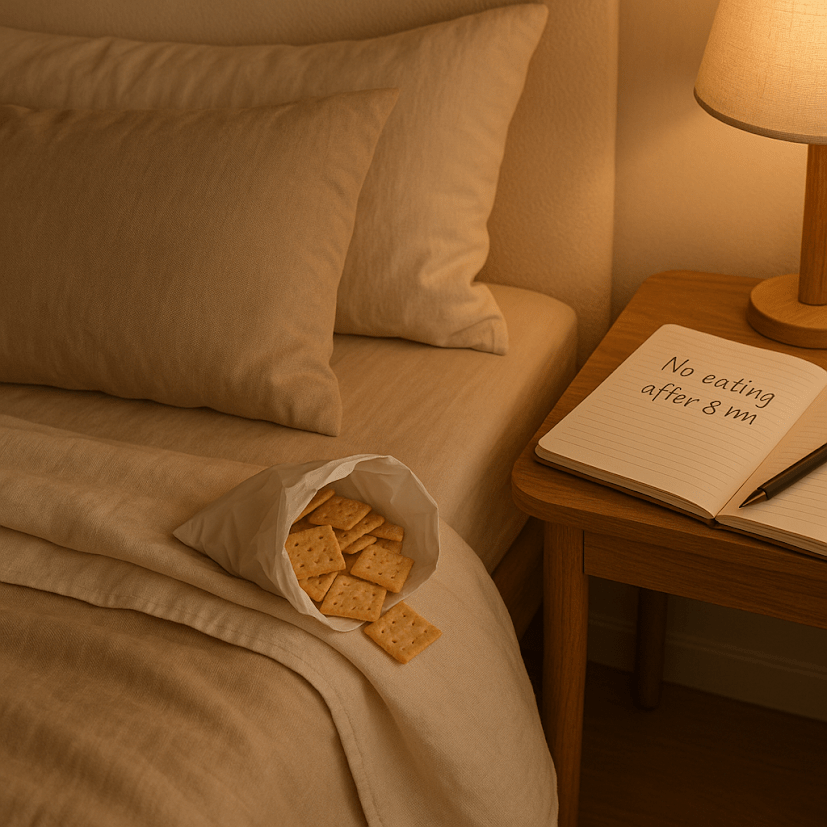
Yesterday, I had a really healthy day with food. I felt proud of myself. Then, later that night, I was in bed eating some fruit when I accidentally knocked my phone onto the floor. I leaned over to grab it, and that’s when I saw them—an opened bag of crackers I had binged on back on Easter. I had completely forgotten about them until that moment.
And just like that, everything shifted.
I got back into bed, but suddenly I felt hungry—almost uncomfortably so. The excuses started rushing in, like a familiar chorus: You already messed up before, just finish the bag. It’s just this once. You’re probably actually hungry. I didn’t fight them for long. I gave in. And afterward, I felt that deep, heavy guilt. I even woke up in the middle of the night, just kicking myself.
But somewhere between shame and exhaustion, I had a realization: I’ve been doing a good job holding boundaries with others, but I haven’t been holding any with myself.
That moment wasn’t just about crackers—it was about self-trust. It showed me how quickly my brain can fall back into old patterns when I don’t have clear, compassionate boundaries to support me. Not rules. Not restrictions. Just loving guardrails that help me feel safe.
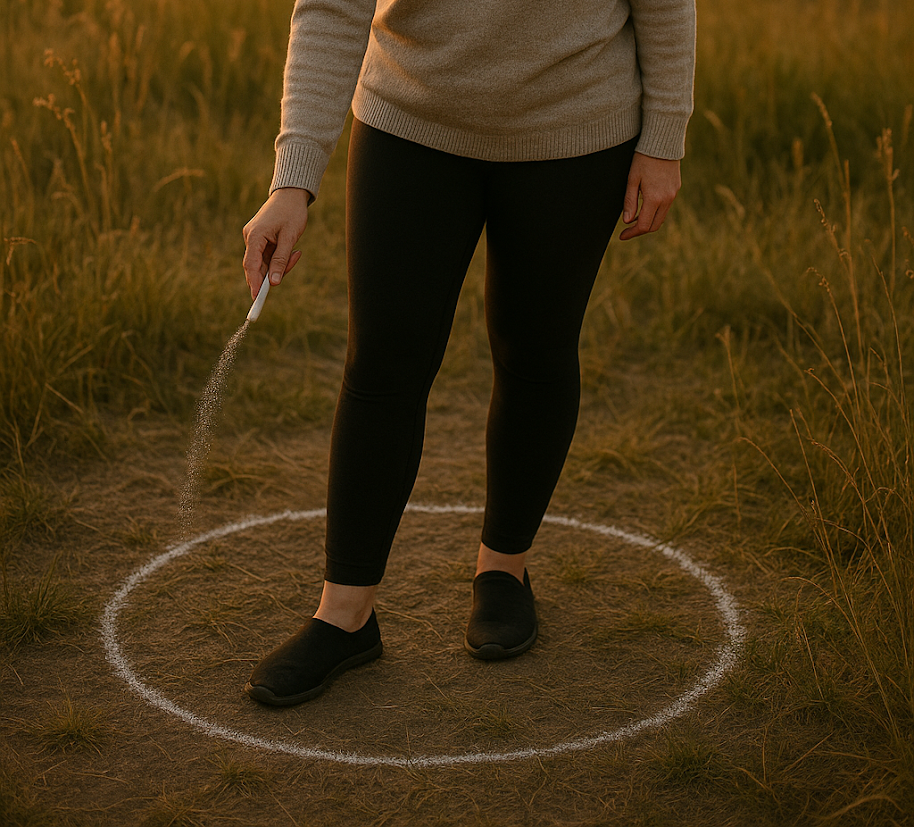
So I’ve decided to start small, with two gentle boundaries that feel right for me right now:
1. No Eating After 8 PM Evenings are when I tend to feel the most vulnerable. I’m tired, emotionally worn, and more likely to confuse other needs—like comfort, rest, or distraction—for hunger. My boundary: I stop eating after 8 p.m. If an urge comes up, I check in with myself: What am I really needing right now?
2. Anchor Phrase for Urges When those sneaky justifications start whispering in my ear, I need a way to interrupt the script. My boundary: When I feel an urge, I pause and say: “This isn’t about hunger—it’s about something else. Let me check in.”
These boundaries aren’t meant to trap me—they’re meant to hold me.
If you’re on a healing journey too, maybe ask yourself: What boundaries am I holding for others that I haven’t yet learned to hold for myself? And what would it look like to offer yourself the same structure and care?
We deserve that kind of self-respect. We really do.

 chaosandcarrots.blog