Last weekend was Halloween, and I let myself go completely wild. I told myself it was okay — it’s Halloween, after all — and gave myself permission to eat whatever I wanted. That “permission” turned into opening the floodgates, and I ended up gorging myself all weekend long.
Every night I ate until I felt sick. I couldn’t sleep well, my body was overloaded, and by Monday, I felt physically awful and emotionally wrecked. I even had alcohol on Halloween, which only made things worse — I regretted it the moment I realized how terrible my sleep and anxiety were afterward.
By Monday morning, I was exhausted, foggy, and anxious. The more I’ve reflected on my past binges, the clearer it’s become: the anxiety always follows. And it’s usually tied to sugar — the more sugar I eat, the more anxious and hopeless I feel in the days after.
That’s when I made a decision.
I decided to stop being cruel to myself.
I decided that I deserve consistency.
I decided that I deserve a healthy, fit body and a calm, stable mind.
Because the truth is, gorging myself on food isn’t self-care — it’s self-destruction. And I’m done with that.
—
When I Binge, I Disconnect
When I’m in binge mode, I completely check out. I get irritable, I ignore my kids, I ignore my husband, and I scroll mindlessly on my phone. It’s like I’m not even there. And it can last the entire weekend — once I binge one night, I almost always continue through Sunday.
Weekdays aren’t the problem anymore; I’ve built better structure during the week. But weekends? My brain still automatically associates them with indulgence and “freedom.” It’s a pattern I’ve repeated so often that it’s now a habit.
My brain has learned that weekends = sweets, overeating, and escape.
Now, it’s time to teach it something new.
—
Reprogramming My Mind
This week, I took a gentler approach. Instead of diving into restriction (which only backfires), I allowed myself to binge on fruit if I felt the urge. It’s helping me transition out of the old pattern without the all-or-nothing thinking.
And moving into the next week, I’m setting small, consistent goals:
Eat one meal mindfully every day. I struggle with this, especially at dinner when I’m starving and distracted by my kids. I want to practice slowing down, chewing thoroughly, and actually enjoying my food.
Increase my hydration. I know how much better I feel when I’m drinking enough water.
Walk at least 6,000 steps a day. Nothing extreme — just enough to move my body and clear my head.
Each morning, I also spend a few minutes visualizing what it feels like to be at my healthiest weight — strong, confident, and at peace in my body. It’s my reminder that this journey isn’t about punishment; it’s about becoming who I’m meant to be, one small step at a time.
—
Why I’m Sharing This
I’m writing all of this because I know I’m not the only one who struggles. The guilt, the frustration, the feeling of hopelessness — it’s real, and it’s heavy. But I’m ready to change, and I want to help others who feel stuck in the same cycle.
Because it really does start with mindset.
My old mindset made me believe I needed to “let go” on weekends to feel free. My new mindset is learning that freedom comes from consistency, not chaos. It’s about teaching my brain that weekends are safe — I don’t need to go into survival mode.
So this is where my next chapter begins: with small, steady steps toward peace, health, and self-respect.
—
If you’re reading this and you relate — you’re not alone.
This journey is hard, but it’s possible. And we’re worth every effort it takes to heal.
food triggers
-
Breaking the Weekend Binge Cycle: Choosing Consistency Over Cruelty
-
I Set Boundaries With Everyone—Except Me

Yesterday, I had a really healthy day with food. I felt proud of myself. Then, later that night, I was in bed eating some fruit when I accidentally knocked my phone onto the floor. I leaned over to grab it, and that’s when I saw them—an opened bag of crackers I had binged on back on Easter. I had completely forgotten about them until that moment.
And just like that, everything shifted.
I got back into bed, but suddenly I felt hungry—almost uncomfortably so. The excuses started rushing in, like a familiar chorus: You already messed up before, just finish the bag. It’s just this once. You’re probably actually hungry. I didn’t fight them for long. I gave in. And afterward, I felt that deep, heavy guilt. I even woke up in the middle of the night, just kicking myself.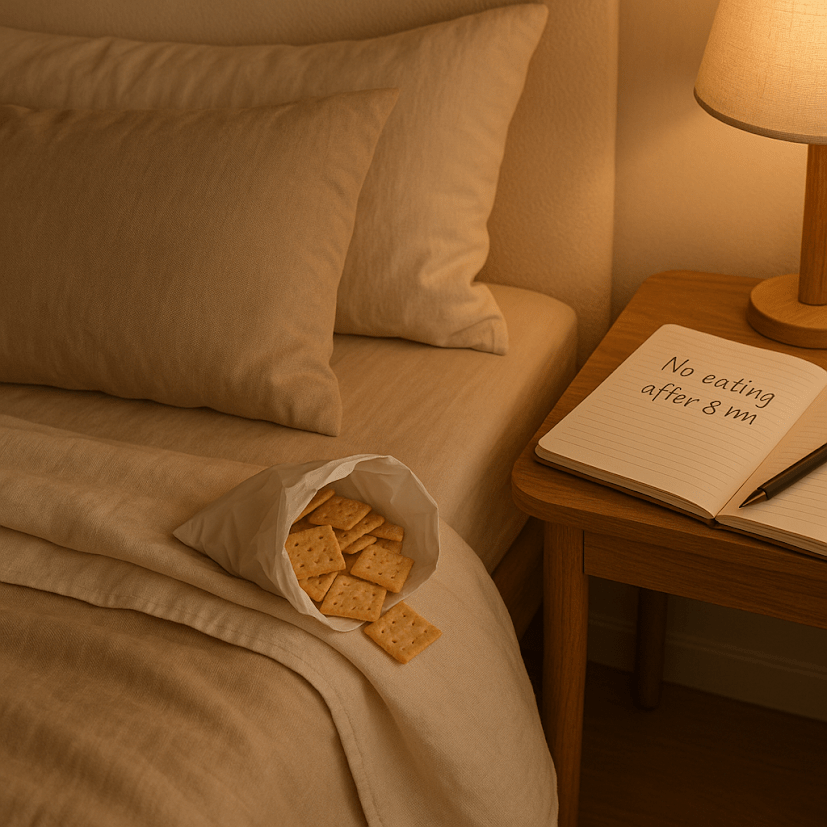
But somewhere between shame and exhaustion, I had a realization:
I’ve been doing a good job holding boundaries with others, but I haven’t been holding any with myself.
That moment wasn’t just about crackers—it was about self-trust. It showed me how quickly my brain can fall back into old patterns when I don’t have clear, compassionate boundaries to support me. Not rules. Not restrictions. Just loving guardrails that help me feel safe.
So I’ve decided to start small, with two gentle boundaries that feel right for me right now:
1. No Eating After 8 PM
Evenings are when I tend to feel the most vulnerable. I’m tired, emotionally worn, and more likely to confuse other needs—like comfort, rest, or distraction—for hunger.
My boundary: I stop eating after 8 p.m. If an urge comes up, I check in with myself: What am I really needing right now?
2. Anchor Phrase for Urges
When those sneaky justifications start whispering in my ear, I need a way to interrupt the script.
My boundary: When I feel an urge, I pause and say:
“This isn’t about hunger—it’s about something else. Let me check in.”
These boundaries aren’t meant to trap me—they’re meant to hold me.
If you’re on a healing journey too, maybe ask yourself:
What boundaries am I holding for others that I haven’t yet learned to hold for myself? And what would it look like to offer yourself the same structure and care?
We deserve that kind of self-respect. We really do.
 chaosandcarrots.blog